Your logo is the first thing customers see on your bag. The printing method you choose affects not just how it looks, but how long it lasts, how much it costs, and what materials it works on. Pick the wrong method and your logo may crack after a few washes, fade in sunlight, or look cheap on a premium product. This guide walks you through the five most common logo printing methods used in bag manufacturing, with honest comparisons of cost, durability, and best-use scenarios.
1. Screen Printing
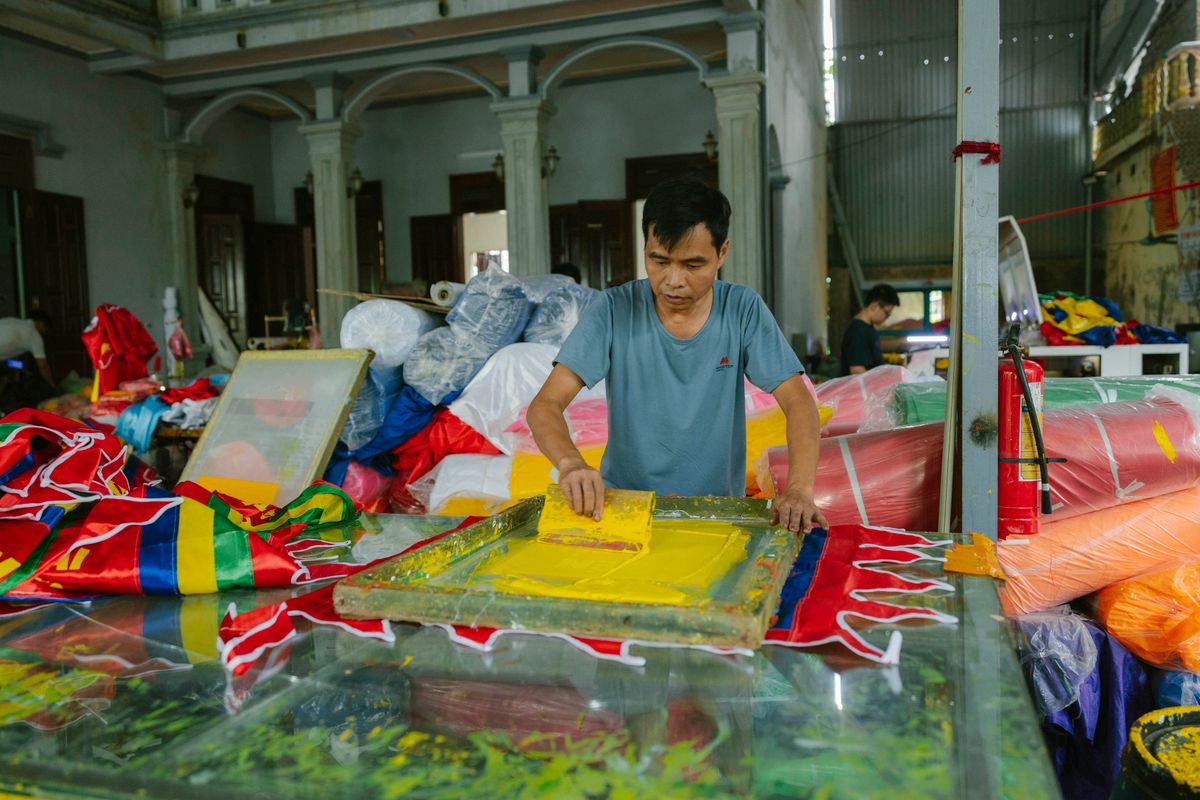
Screen printing is the most widely used logo application method in bag manufacturing, and for good reason. A mesh screen is created for each color in your design, and ink is pressed through the screen onto the fabric. Each color requires a separate screen and a separate pass.
- Best for: Cotton, canvas, jute, and non-woven bags
- Cost: Low per unit at high volumes ($0.10 to $0.50 per print). Setup cost of $20 to $50 per color.
- Durability: Excellent. Screen-printed logos can withstand 50 to 100+ washes without significant fading.
- Color limitations: Best for 1 to 4 colors. More colors increase cost and setup time.
- Detail level: Good for bold, simple designs. Fine gradients and photographic images are not suitable.
Screen printing is the default choice for promotional tote bags and jute bags. If your logo has 2 or 3 solid colors and you are ordering 1,000 or more units, this is almost certainly your best option.
"Screen printing gives you the best cost-to-durability ratio of any printing method. For 80 percent of our promotional bag orders, it is the right choice." — Eco Trade Limited Print Department
2. Heat Transfer Printing
Heat transfer uses heat and pressure to bond a pre-printed design (on transfer paper or vinyl) onto the bag surface. The design is printed digitally first, then transferred. This allows for full-color, photographic-quality prints.
- Best for: Cotton, canvas, polyester, and blended fabrics
- Cost: Moderate ($0.30 to $0.80 per print). No per-color setup, but per-unit cost is higher than screen printing.
- Durability: Good, but lower than screen printing. Expect 20 to 50 washes before noticeable fading or cracking.
- Color limitations: Unlimited — full CMYK color, gradients, and photographic images are all possible.
- Detail level: Excellent. Can reproduce fine text, gradients, and photographic images.
Choose heat transfer when your logo has many colors, gradients, or photographic elements that screen printing cannot handle. It is also a good option for smaller order quantities since there is no per-color screen setup cost.
3. Embroidery
Embroidery uses thread stitched directly into the fabric to recreate your logo. It is the premium option — the raised, textured finish communicates quality and craftsmanship in a way no printed logo can match.
- Best for: Canvas, cotton, jute, and heavier fabrics. Not suitable for thin or delicate materials.
- Cost: Higher ($0.50 to $2.00 per logo, depending on size and stitch count). Digitizing fee of $20 to $60 for the embroidery file.
- Durability: Outstanding. Embroidered logos last the life of the bag — they do not crack, peel, or fade.
- Color limitations: Up to 12 thread colors per design. Color matching is close but not exact — thread colors are chosen from a fixed palette.
- Detail level: Limited. Small text (under 5mm) and fine lines do not reproduce well. Best for logos with bold shapes and limited text.
Embroidery is the right choice for premium canvas bags, retail-grade jute bags, and any product where perceived value matters. If you are selling a $15+ bag, the tactile quality of embroidery justifies the cost.
4. Debossing / Embossing
Debossing presses your logo into the material using a heated metal die, creating a recessed impression. Embossing does the opposite, creating a raised impression. These methods are primarily used on leather and PU leather bags.
- Best for: Genuine leather, PU leather, and heavyweight synthetic materials
- Cost: Moderate to high ($0.40 to $1.50 per logo). Die cost of $50 to $150.
- Durability: Permanent — the impression is physically pressed into the material and cannot wear off.
- Color limitations: Typically tone-on-tone (same color as the material). Can be combined with foil or color fill for contrast.
- Detail level: Good for bold logos and text. Fine details may not transfer clearly.
Debossing is the signature look of premium leather goods. If you are producing custom leather or PU bags for a fashion brand, corporate gift, or high-end promotional item, debossing delivers a sophisticated, understated logo that printed methods simply cannot match.
5. Digital / DTG Printing
Direct-to-Garment (DTG) printing uses a specialized inkjet printer to spray water-based ink directly onto the fabric. It works like a desktop printer, but for textiles. No screens, no transfers — just digital artwork printed straight onto the bag.
- Best for: Cotton and canvas bags. Not suitable for jute, leather, or synthetic materials.
- Cost: Moderate ($0.40 to $1.00 per print). No setup cost — ideal for small runs.
- Durability: Moderate. DTG prints are softer and more breathable but fade faster than screen prints — expect 20 to 40 washes.
- Color limitations: Unlimited. Full CMYK with gradients, photographs, and millions of colors.
- Detail level: Excellent. Can reproduce photographic images and fine text with precision.
DTG is the best choice for small orders (under 500 units) with complex, full-color designs. It eliminates setup costs and allows for unlimited colors, but the per-unit cost does not drop significantly at higher volumes, so screen printing becomes more economical above 500 to 1,000 units.
Quick Comparison Table
- Screen Printing: Lowest cost at volume, highest durability, limited colors, best for simple logos on cotton/jute
- Heat Transfer: Full color, moderate cost, moderate durability, best for photographic designs
- Embroidery: Highest perceived value, highest durability, limited detail, best for premium positioning
- Debossing: Premium leather look, permanent, tone-on-tone, best for leather/PU bags
- DTG Digital: No setup, full color, moderate durability, best for small runs with complex designs
How to Choose
Start by answering three questions. What material is your bag? How many colors does your logo have? What is your order quantity? The answers will narrow your options quickly. For 1,000+ cotton or jute bags with a 2-color logo, screen printing is almost always the answer. For 200 premium canvas bags where quality matters most, embroidery. For 300 bags with a full-color photographic logo, heat transfer or DTG. For leather bags, debossing.
At Eco Trade Limited, we offer all five methods in-house. Send us your logo file and bag specifications, and our team will recommend the best printing method for your product, quantity, and budget. We can also produce sample prints so you can compare methods side by side before committing to a full production run.